Boxing News

 DKP
Somewhere in the home office of a 95-year-old man in Florida sits a 25-year-old trophy that, if you allow yourself to engage in the mildest strain of conspiratorial thinking, represents all that makes boxing so bizarre, so wonderful, so awful — and, in particular, what makes it, as Larry Merchant so famously said, “the theater of the unexpected.”
Bernard Hopkins was not supposed to beat Felix Trinidad. He was not supposed to beat him on the original fight date of September 15, 2001. He was not supposed to beat him on the rescheduled date of September 29, 2001 — 25 years ago this Tuesday. And Don King, the now-95-year-old Florida man referenced above, was, if you believe Hopkins’ telling of the story, so committed to the idea that “The Executioner” was not supposed to beat and would not beat his Puerto Rican superstar that he had Trinidad’s name engraved in advance on the winner’s trophy.
Hopkins-Trinidad was the culmination of King’s Middleweight World Championship Series, a four-fighter tournament to unify all the 160-lbs belts and determine the true champion of the division, and the winner was promised the Sugar Ray Robinson Trophy on top of all the belts he’d be collecting.
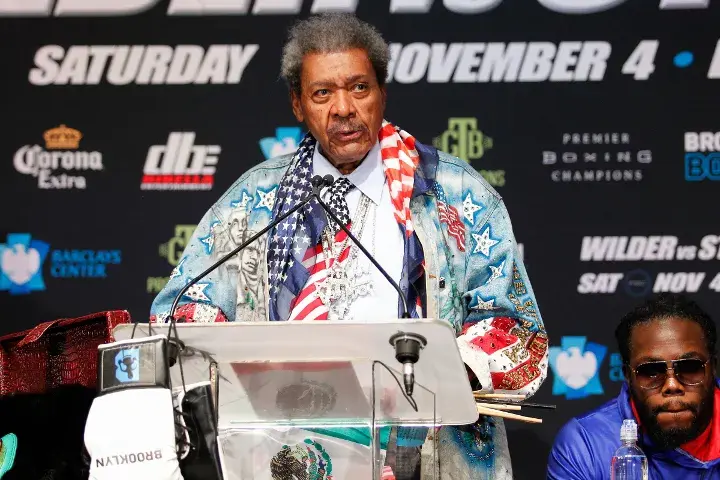
At the press conference after Hopkins, a +350 underdog, stopped “Tito” in the 12th round in front of a reeling Madison Square Garden crowd, there was no trophy presentation. It wasn’t until a week later, at a press conference at Gallagher’s Steakhouse in New York, that Hopkins received his statuette of Sugar Ray. A few weeks later, as Hopkins told me in 2016 for an HBO documentary-style podcast, he was at King’s house in Deerfield Beach, snooping around his office while waiting for the tardy promoter to arrive for their meeting, when he saw a Sugar Ray Robinson trophy that looked exactly like his, except with the name “Felix Trinidad” engraved on it.
If you don’t want to be so conspiratorial, you can subscribe to the theory put forth by former HBO Pay-Per-View executive Mark Taffet that King had a replica made for himself as a keepsake, and since Taffet never laid eyes on that duplicate, he couldn’t speak to Hopkins’ assertion that it had Trinidad’s name on it.
But you don’t need to believe the moon landing was filmed on a Hollywood soundstage to follow the logic that the reason Hopkins didn’t get his trophy the night he TKO’d Trinidad was because the powers-that-be considered a Tito triumph to be a fait accompli and they couldn’t very well hand B-Hop a prize with another man’s name on it.
To parody King’s favorite phrase: Only in boxing. According to Hopkins, the promoter was ill-prepared when, in this theater of the unexpected, the unexpected happened in the ring.
Of course, any reflections on the Hopkins vs. Trinidad fight must also reflect on the unexpected happening to all of America four days before the fight’s original date.
Hopkins had just gotten back from a run in Central Park when American Airlines Flight 11 struck the World Trade Center’s North Tower on Tuesday, September 11. After that, he was scheduled to go to the Trinity Boxing Club in Tribeca, barely a block from the Twin Towers, for a public workout. His adviser at the time, Lou DiBella, was headed for the same place, when he saw flame and smoke explode from the South Tower as United Flight 175 crashed into it, just in time for him to pull off the highway at the last exit before entering Manhattan.
There would of course be no public workout. And by that evening, it had been decided that there would be no fight card at MSG that Saturday.
Hopkins later said that, in the first days of processing the terrorist attacks of 9/11, he gave in to pessimistic thinking that the fight would most likely be rescheduled for sometime in 2002. But just in case — and because for Hopkins, a day without training is like a day without breathing — he never broke camp. It was easy and convenient enough for Hopkins to head back home to Philadelphia and just keep training there.
It wasn’t so easy for Tito to fly back home to Puerto Rico, and the HBO folks as well as King’s people made sure not to let Trinidad leave New York, as they were worried if he did, Hopkins’ predicted “sometime in 2002” timeline would become reality — whereas they were pushing to re-book the Garden as quickly as possible and perhaps make Hopkins-Trinidad the first major professional sporting event in Manhattan after 9/11. So they kept Trinidad in New York. They kept him busy visiting firehouses and serving food to rescue workers.
And they managed to get the fight rescheduled for just two weeks after its original date, Saturday, September 29.
It’s impossible to know if the fight would have played out any differently on September 15 than it did a fortnight later, but Trinidad supporters have certainly made the case that he was the more distracted of the two boxers, that his training was more disrupted and that the delay favored Hopkins.
As an aside, the delay also worked out in my favor as a boxing journalist and fan. I’d attended the first fight of the Middleweight World Championship Series, Hopkins’ win over Keith Holmes, and the second fight, Trinidad’s ear-splitting knockout of William Joppy, and I wanted to be there for the finale. But, alas, a close friend was getting married in Princeton, New Jersey, on September 15.
Then-USA Today boxing writer Dan Rafael gave me a hard time when I told him I’d be missing the fight, insisting, “Your friend will get married again, but Trinidad-Hopkins only happens once.” (For the record, my friends are still married 25 years and three kids later, but Dan was correct that Hopkins and Trinidad only fought each other one time.)
Anyway, I got to do both: I went to the wedding on September 15, and I sat ringside for Hopkins-Trinidad on September 29. (Hopefully even the most conspiratorially minded reader will stop short of accusing me of anything nefarious.)
On either date, Jim Lampley was going to be just a few feet from the action, calling the fight for HBO Pay-Per-View.
“It was otherworldly just to be there. This happened so fast, I never dreamed they could put the fight together within two weeks. I never dreamed I’d be back in New York so quickly after 9/11,” Lampley recalled in 2016. “I was shocked, I was kind of awestruck that it was actually taking place, that we were there. And just as the city would later demonstrate in the playoffs and the World Series in the baseball postseason, the city was ready for a visible statement of its continuing vibrancy and importance, and that statement was there in Madison Square Garden that night.”
It was an atmosphere unlike anything any of us had felt for a sporting event. The weeks after 9/11 were filled with internal questions of whether it was OK to laugh again, to cheer again, to have fun again. The crowd at MSG that night, while overwhelmingly pro-Trinidad, was not as enthusiastic as usual. They were there to enjoy the fights and to root on their hero, but it wasn’t raucous. Like everyone else across the country, the 19,000 or so inside the building weren’t entirely sure how to act.
“It was the first major step toward healing. And it was the most emotional event I have ever attended or participated in,” the late Steve Smoger, the third man in the ring that night, told me. “I had to maintain my composure. I really, really did. I said, ‘You’re here to do a job, you cannot get caught up in it.’”
Smoger ultimately did just fine. But nobody could possibly have topped Hopkins when it came to maintaining composure, not getting caught up in it and doing his job.
Twenty-five years later, I still consider what Hopkins did against Trinidad to be the single greatest performance by a boxer — taking into account the perceived quality of the opponent and the completeness of the demonstration — that I’ve ever seen, whether in person or on TV.
It’s easy now to lose sight of how highly regarded Trinidad was at the time, when he was coming off back-to-back violent KOs of Fernando Vargas and Joppy. He’d quickly risen from welterweight to junior middleweight to middleweight and had such momentum that an ascension to light heavyweight to take on Roy Jones Jnr was being seriously discussed.
Yes, Trinidad should probably have had one loss on his record before the Hopkins fight. But there were also rationalizations behind his lackluster performance against Oscar De La Hoya. Tito was killing himself to make 147, we figured, and he never did fight at that weight again. And he was unquestionably coming on over the final third of the fight. Trinidad supporters, even if acknowledging De La Hoya should have won on points, made the very reasonable case — especially after watching him subsequently wear down Vargas and David Reid — that the Puerto Rican’s pressure was getting to Oscar and that, in the 15-round days, it would have been a Trinidad win without controversy.
The point is, we now think of Trinidad as an eminently beatable, out-box-able fighter, because Hopkins did it, and a few years later Winky Wright did it, and eventually Jones did it when he and Trinidad were both used up. But in September 2001, Trinidad was entering that prime-Mike-Tyson realm of perceived invincibility.
And Hopkins out-thought and outfought him at every turn in an absolute masterpiece. The Executioner’s focus from bell to bell was otherworldly, as was his footwork. He won almost every round, slugged with Tito when he had to and got the better of those exchanges and then dropped and stopped Trinidad for the exclamation point. The punch stats tell you just how dominant Hopkins was against an opponent many expected to roll right over him: He threw 653 punches to just 329 from Trinidad, and he landed 260 shots, more than doubling Tito’s 129.
Hopkins later explained to me the critical element of his game plan: figuring out the timing behind Trinidad’s signature left hook. He watched the De La Hoya fight and the Vargas fight and picked up on a 1-2-3, left-right-left body sequence Trinidad usually deployed before firing the hook. So Hopkins targeted punching midway through that rhythmic pattern, 1½ beats into the set of three, to disrupt Tito.
“If you can time that, when he rocks … you can catch him and make him start all over,” Hopkins said. “Every time he rocked, I touched him softly, I touched him hard sometimes, just on the shoulders, threw it out there, rock him, offset his 1-2-boom… Every time he reset, I threw combinations, I beat him to the punch, I start confusing him.”
You can make the case that Tyson against Michael Spinks, or Thomas Hearns against Roberto Duran, or Joe Louis in his rematch with Max Schmeling were greater wins against a comparably elite level of opposition. But those were each over so quickly that the victor didn’t get to show off his entire arsenal. What Hopkins did stands out because he got to show everything. The only performance to rival it since was Terence Crawford against Errol Spence in 2023 — but Spence was no Trinidad.
In retrospect, Trinidad simply wasn’t prepared for Hopkins’ mental strength and the extent of his mind games. You’ll recall that B-Hop caused a riot in Puerto Rico when he threw the island nation’s flag to the ground during a press conference. You’ll recall that Hopkins’ assistant trainer, Naazim Richardson, identified objectionable techniques in Trinidad’s hand wrapping just prior to the fight and convinced the New York commission to make Team Trinidad unwrap and start over.
Trinidad was 40-0 with 33 knockouts coming into this bout and never for a moment doubted that he would be 41-0 when it was over. He underestimated what he was up against. And, if what Hopkins says about the second statuette is true, so did Don King.
But Hopkins wasn’t at all surprised by the outcome. One largely forgotten detail of this fight is that this was the night Hopkins became the first championship-level boxer to sell real estate on his back with a temporary tattoo — a trend that took off over the next few years. Back then, there were no legal, regulated gambling websites in the U.S., but offshore betting sites such as GoldenPalace.com were gaining momentum. And Hopkins collected an extra $100,000 for having that web address painted across his upper back in black block letters.
Actually, he collected an extra $450,000, because he bet the entire amount on himself to win at 3½ to 1 odds.
That’s some serious self-belief. The phrase “theater of the expected” doesn’t have much zing to it, but for Hopkins, that’s precisely what the events of September 29, 2001 represented.
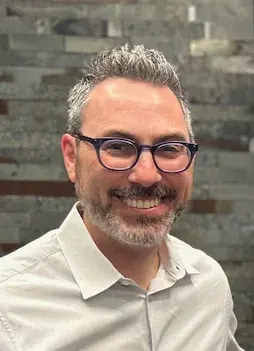
Eric Raskin is a veteran boxing journalist with nearly 30 years of experience covering the sport for such outlets as BoxingScene, The Good Fight, ESPN, Grantland, Playboy, and The Ring (where he served as managing editor for seven years). He also co-hosted The HBO Boxing Podcast, Showtime Boxing with Raskin & Mulvaney, The Interim Champion Boxing Podcast with Raskin & Mulvaney, and Ring Theory. He has won four first-place writing awards from the BWAA, for his work with The Ring, Grantland, HBO, and BoxingScene. Outside boxing, he is the senior editor of CasinoReports and the author of 2014’s The Moneymaker Effect. He can be reached on X, BlueSky, or LinkedIn, or via email at RaskinBoxing@yahoo.com.